
How to Start a Café or Restaurant Brand in India

Updated: Sep 28
Starting a café or restaurant looks simple from the outside. You imagine the space, the menu, the aroma of coffee, and customers filling the seats. In reality, most food businesses struggle not because the food is bad, but because the brand, systems, and positioning are weak. Many new cafés and restaurants launch with average branding, unclear menus, poor delivery presence, and no real plan for visibility. If you want to start a café or restaurant brand in India, you need more than recipes and interior ideas. You need clarity on the business model, brand identity, customer experience, and growth systems.
Here’s a practical way to think about it.
Start a Café or Restaurant Brand in India: Choose the Right Format
Not every food business should be a full dine-in restaurant. Some of the common formats in India include:
Specialty café
Cloud kitchen
QSR (Quick Service Restaurant)
Casual dining
Food truck or kiosk
Fine dining
Each format has different cost structures, staffing needs, margins, and marketing requirements. A cloud kitchen depends heavily on Zomato and Swiggy. A café depends more on ambience, Instagram appeal, and repeat local customers. A QSR needs speed, consistency, and strong packaging. Choosing the wrong format early can make growth harder later.
Build a Brand, Not Just a Menu

Many restaurants focus only on food and forget branding. Your brand includes:
Name and positioning
Visual identity
Tone of communication
Interior feel
Packaging
Customer experience
People should be able to recognise your brand even before they taste the food. Strong restaurant brands feel intentional. Weak ones feel interchangeable. A clear brand also makes marketing easier. When your identity is sharp, your Instagram, delivery listings, and offline experience all work together instead of looking disconnected.
Design for Experience and Content
In today’s market, restaurants are not just physical spaces. They are also content spaces. Interiors that photograph well, plating that looks good on camera, and small brand details in packaging all help with organic visibility. This does not mean designing only for Instagram. It means understanding that visual appeal influences discovery, especially for cafés and lifestyle food brands.
At the same time, the experience still has to work in real life. Comfort, service speed, cleanliness, and consistency matter more than aesthetics alone.
Treat Your Menu Like a Business System
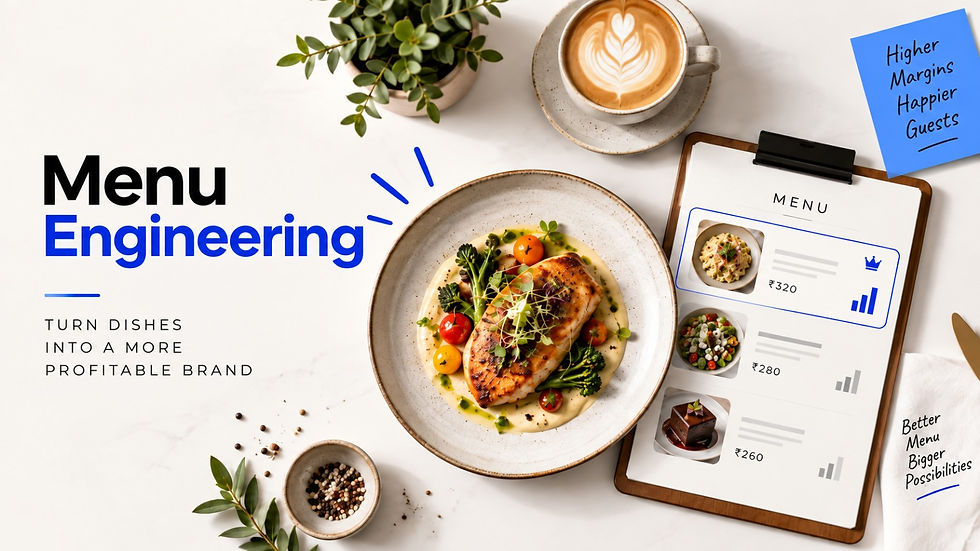
A menu is not just a list of dishes. It affects profits, operations, and customer behaviour. Good menu engineering helps you:
Highlight high-margin items
Simplify kitchen operations
Improve average order value
Reduce confusion for customers
Too many new restaurants create oversized menus that slow down service and increase wastage. A focused menu is usually easier to execute and easier to market.
Build Presence on Zomato, Swiggy, and Google
For most food businesses in India, online discovery matters as much as location. Your Zomato and Swiggy listings should be treated like landing pages. Clear images, strong descriptions, proper categories, and consistent branding improve visibility and conversion. Packaging also becomes part of the brand experience once food leaves the restaurant.
Google Business Profile is equally important for local search. Many people still search “cafés near me” or “best coffee in [area]” before deciding where to go.
Use Instagram as a Growth Channel
Instagram works well for food brands when used with clarity. Instead of random food pictures, stronger content usually includes:
Signature dishes
Behind-the-scenes moments
Customer experience
Short Reels around preparation or ambience
Clear brand personality
Consistency matters more than perfection. A café with a clear visual style and steady content usually builds recognition faster than one that posts occasionally with mixed aesthetics.
Plan Pricing, Costs, and Compliance Early
Passion does not pay rent. Before launching, understand your costs, margins, and break-even point. Pricing should account for ingredients, packaging, delivery commissions, staffing, rent, and marketing. Also handle the basics properly:
FSSAI licence
GST registration if required
Local permissions
Hygiene and safety standards
These are not exciting parts of the business, but ignoring them creates problems later.
Launch Small, Then Systemise
A strong restaurant brand is rarely built in one big launch. It is built by starting with a clear concept, testing what customers respond to, improving operations, and then systemising what works. Some brands later expand through cloud kitchens, additional outlets, or franchising. Others stay small but become highly profitable through strong local positioning.
The goal is not just to open a restaurant. The goal is to build a food brand people remember, return to, and recommend.
Final Thoughts
Starting a café or restaurant brand in India is very possible. But it works best when you treat it like a brand and a system, not just a food outlet. Get clear on your format. Build a memorable identity. Design better experiences. Use delivery platforms and Instagram intentionally. Control your costs. Stay consistent.
If you want a complete, step-by-step system instead of figuring everything out alone, the
How to Start a Café or Restaurant Brand guide on Brandfinity Store is built for that. It covers restaurant business models, brand identity, menu engineering, Zomato and Swiggy optimisation, packaging, pricing, compliance, Instagram marketing, and a practical launch framework — all in one place.
Explore the guide on Brandfinity Store and build your café or restaurant brand with more clarity from day one.
Want a step-by-step guide? Get How to Start a Café or Restaurant Brand (₹349) at Brandfinity Store.


Comments